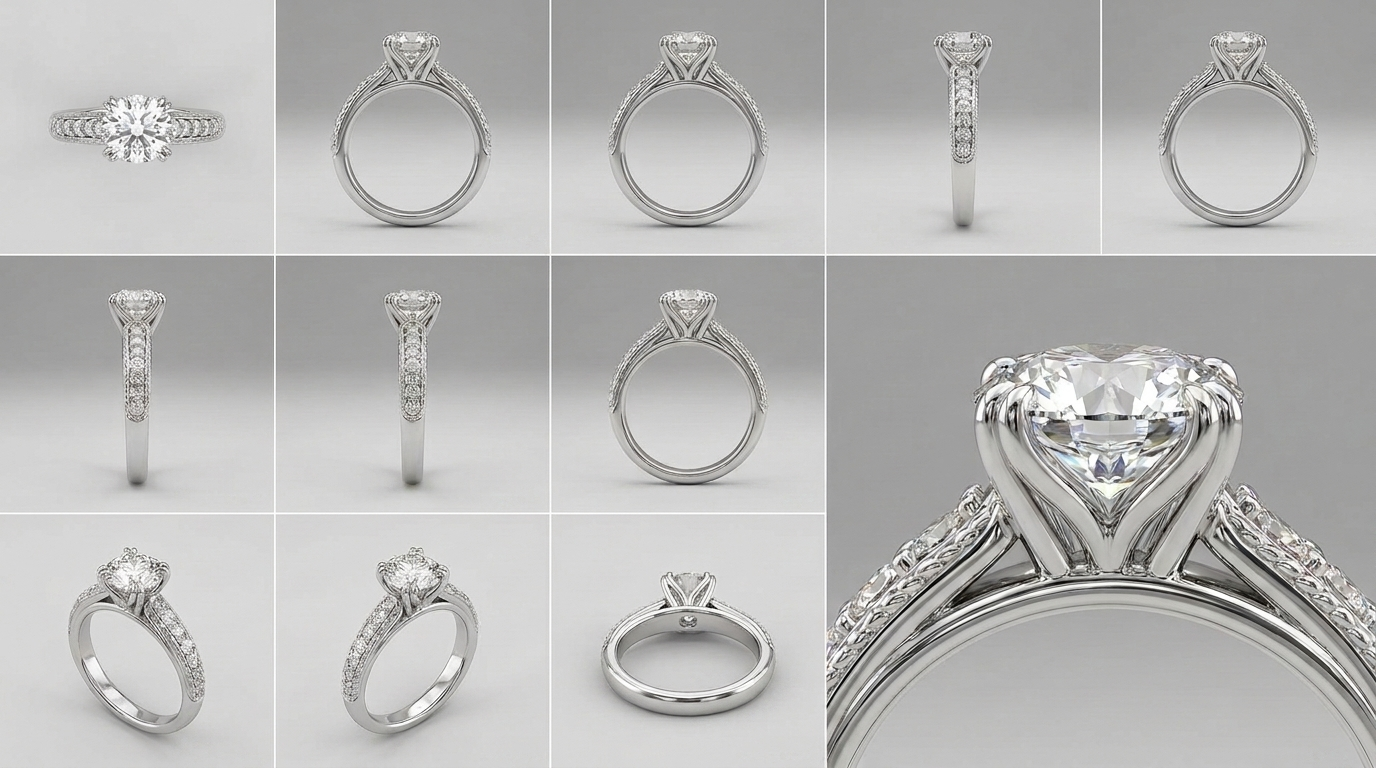
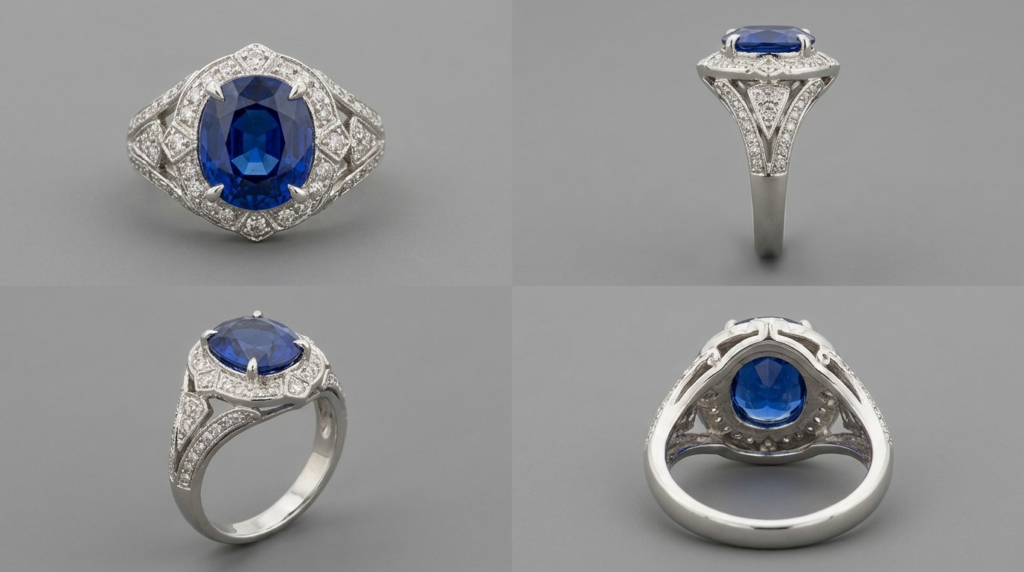
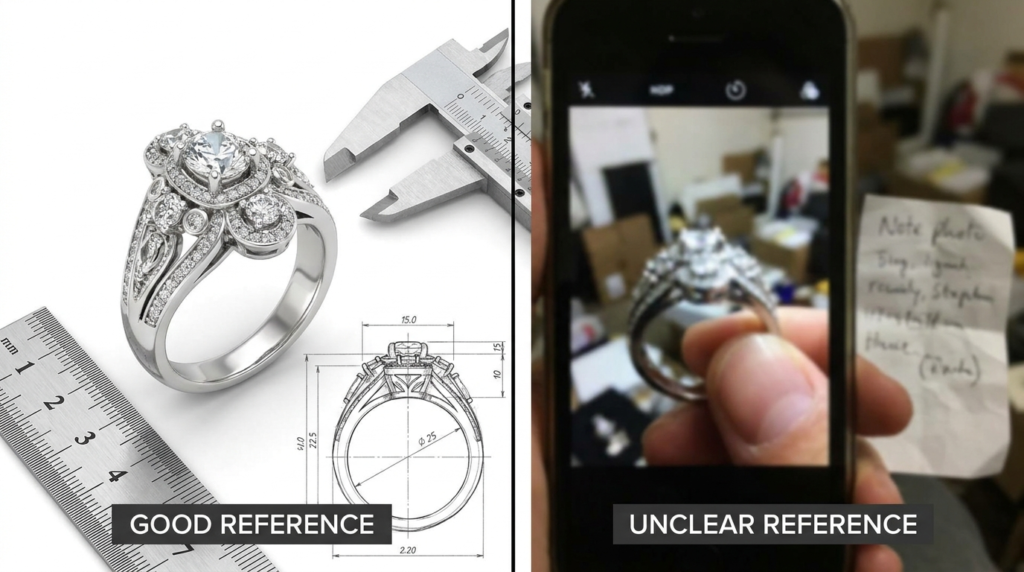
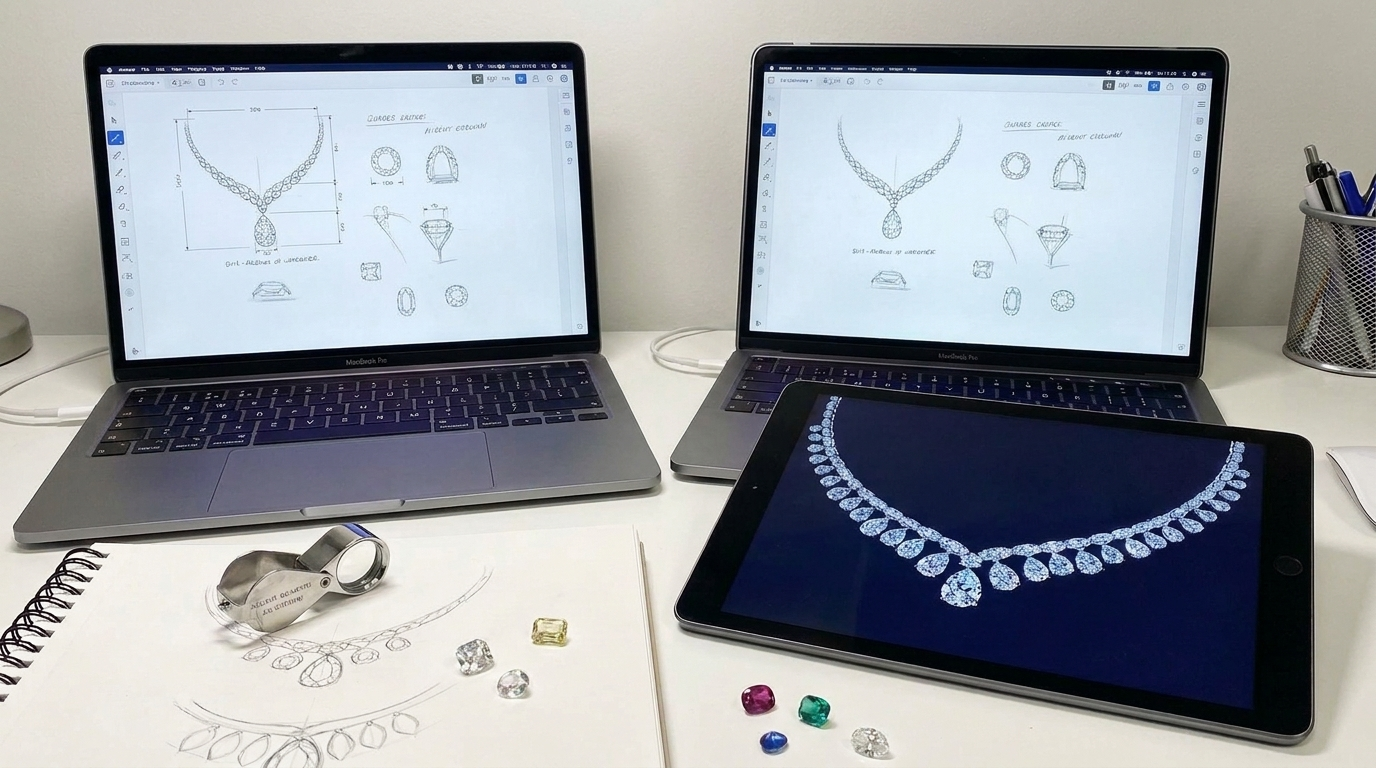
Good reference images for 3D jewelry design should show the piece (or inspiration) from at least three angles, in even lighting, with a clear view of any stones or details — this single preparation step has the biggest impact on how accurate the first draft comes out.
What to Capture
- Front view — the piece straight-on, showing overall proportions.
- Side/profile view — critical for understanding band height, stone depth, and profile shape that a front view alone can’t show.
- Top-down view — especially important for rings and pendants, showing stone placement and setting layout.
- Close-up of any detail work — filigree, engraving, or texture that needs to be replicated precisely.
Lighting Matters More Than Camera Quality
A photo taken in even, natural light on a basic phone camera is far more useful than a professional photo with harsh shadows or glare — shadows can hide details or misrepresent proportions, leading to inaccurate first drafts.
If You Don't Have a Physical Piece to Reference
Inspiration images (from Pinterest, Instagram, or a competitor’s catalog) work as a starting point, but be specific about which exact elements you want replicated — “the halo setting from image 1, combined with the band style from image 2” is far more actionable than a single vague inspiration photo.
Include Written Notes Alongside Images
A short note specifying stone size, metal preference, and ring size (or piece dimensions) alongside your images removes an entire round of back-and-forth clarification.
Frequently Asked Questions
- Can I use screenshots from Instagram or Pinterest as references?
Yes, this is common — just be clear about which specific design elements you want incorporated versus which are just general inspiration.
- What if my reference photos are low resolution?
Low resolution is usually workable for overall shape and proportion, but close-up detail work (engraving, texture) needs higher clarity to replicate accurately.
- Should I include a photo of my hand or the intended wearer?
This can help for custom sizing context, though exact measurements are still needed regardless.