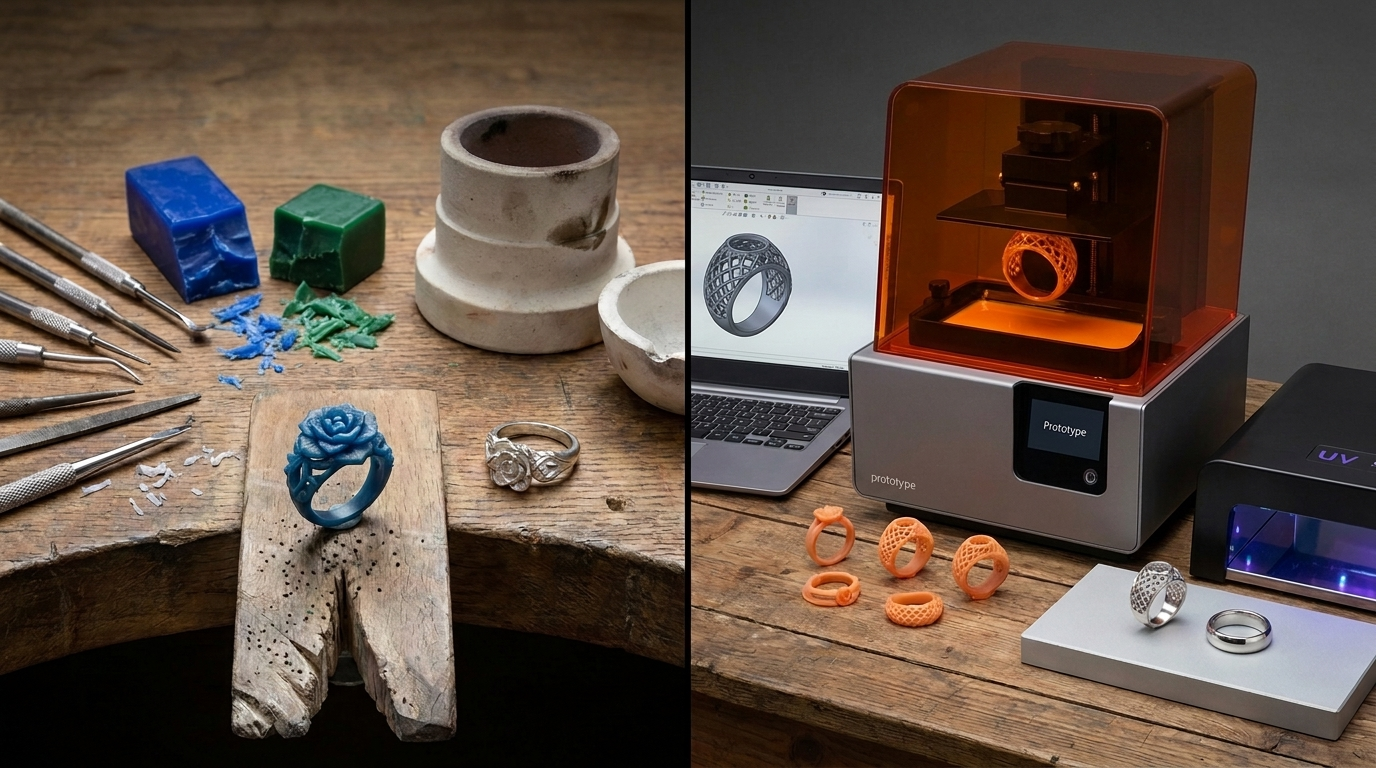
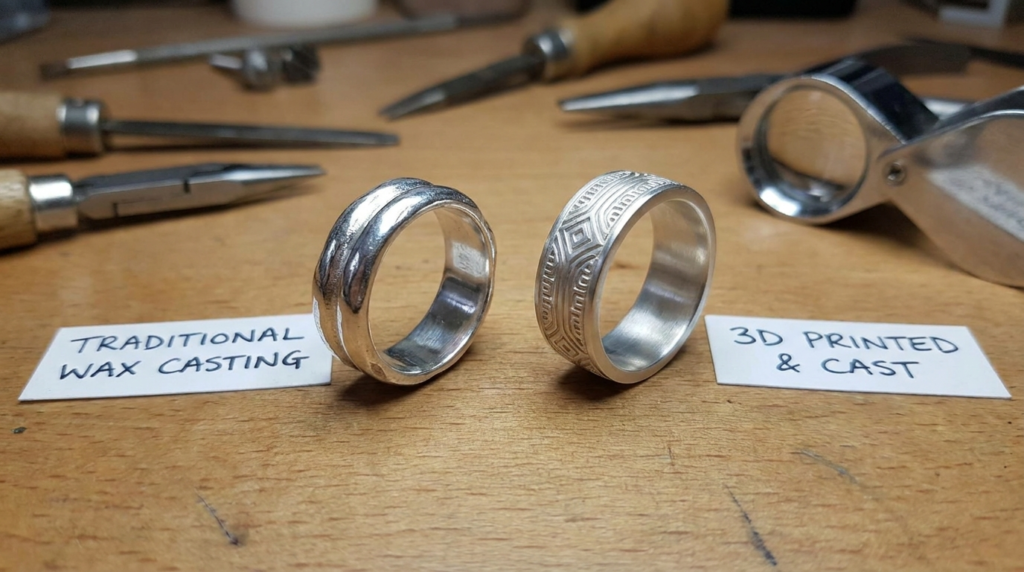
Wax casting vs 3D printing for jewelry production is really a question of pattern-making method — traditional hand-carved wax offers artisan character for one-off pieces, while 3D-printed patterns offer exact reproducibility for CAD-designed pieces at any volume. Both ultimately feed into the same metal-casting process.
Traditional Hand-Carved Wax
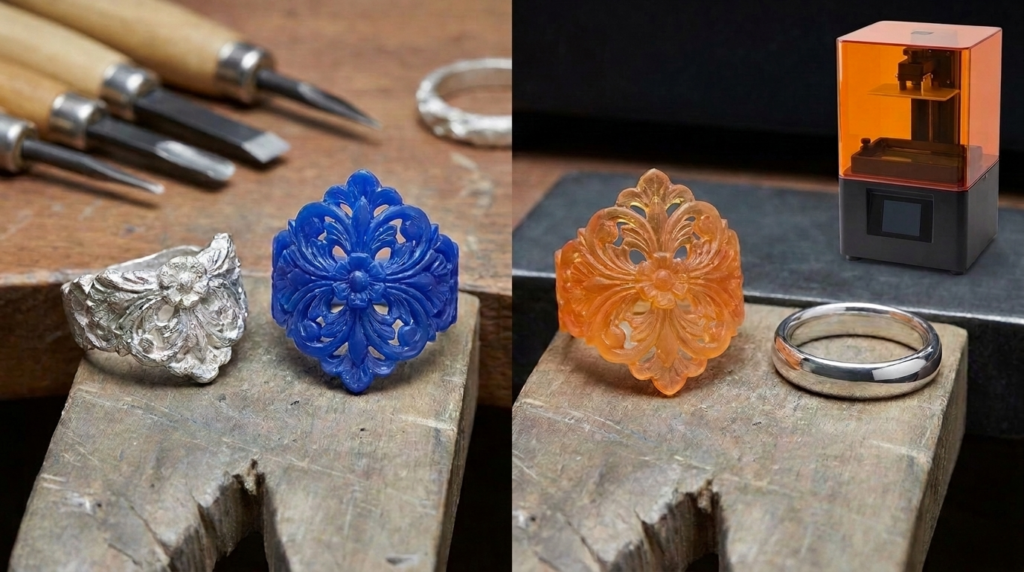
A skilled artisan carves the pattern directly by hand — a process that can take days and produces natural, one-of-a-kind variation, valued for bespoke artisan pieces where that human character matters.
3D-Printed Patterns
Printed directly from a CAD file, producing exact, repeatable geometry that matches the digital design precisely — ideal for pieces requiring identical reproduction across multiple units, or intricate details difficult to hand-carve.
Cost and Turnaround Comparison
- Turnaround for Pattern
- Hand-Carved Wax: Days
- 3D-Printed Pattern: Hours
- Consistency Across Units
- Hand-Carved Wax: Variable
- 3D-Printed Pattern: Exact
- Best For
- Hand-Carved Wax: One-off artisan pieces
- 3D-Printed Pattern: CAD-designed, repeatable production
- Intricate Detail Capability
- Hand-Carved Wax: Limited by carver skill
- 3D-Printed Pattern: High
Which to Choose
If your design originates from a 3D CAD file (which is increasingly the standard), 3D printing the pattern is the natural and most cost-effective next step. Hand-carving remains relevant primarily for artisans working directly in wax without a digital design stage.
Frequently Asked Questions
- Can a 3D printed pattern achieve the same fine detail as hand-carving?
Yes, often exceeding it — 3D printing can reproduce intricate details that would be extremely time-consuming or impossible to hand-carve precisely.
- Is one method more expensive than the other?
3D printing is typically more cost-effective for CAD-based designs, especially for multiple units, while hand-carving costs scale with the artisan’s time per unique piece.
- Does the casting process differ depending on which pattern method is used?
No — both hand-carved and 3D-printed patterns typically go through the same lost-wax casting process afterward.