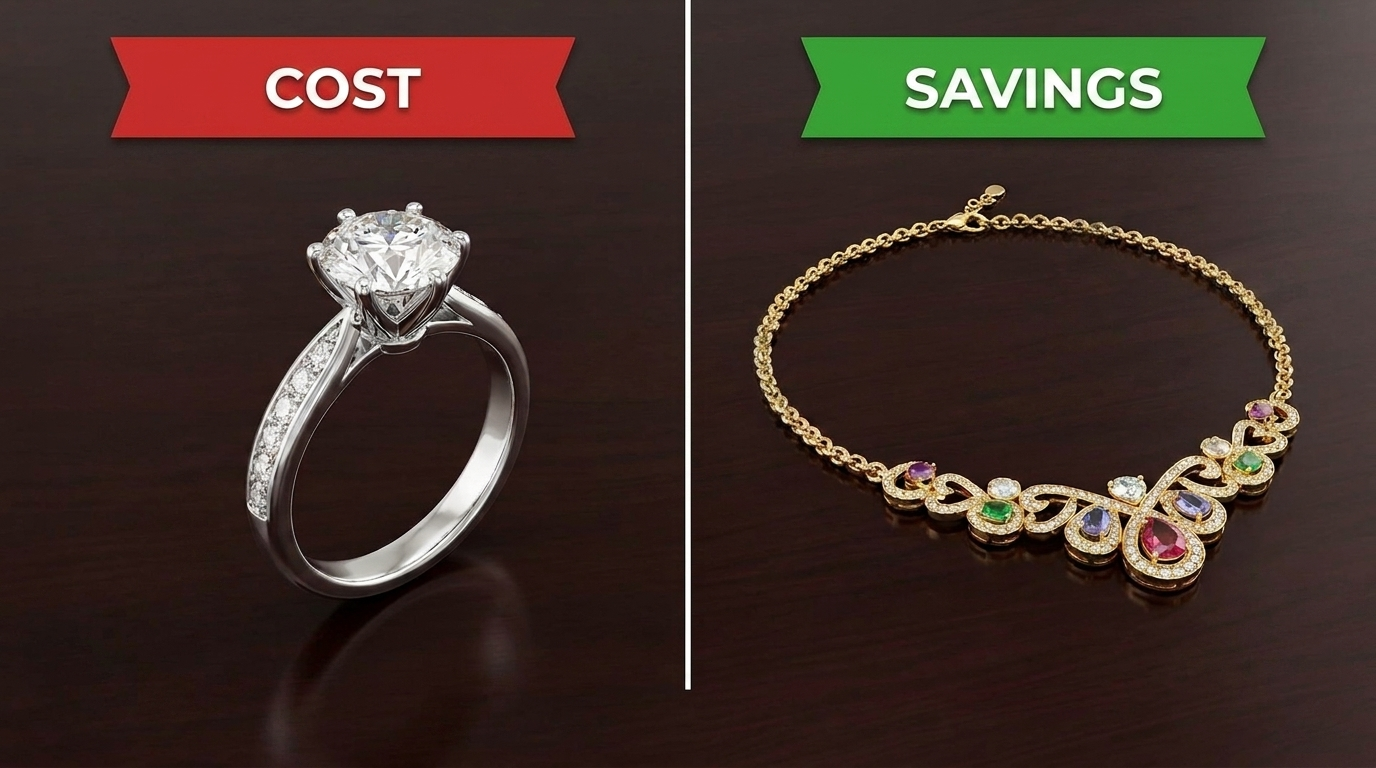
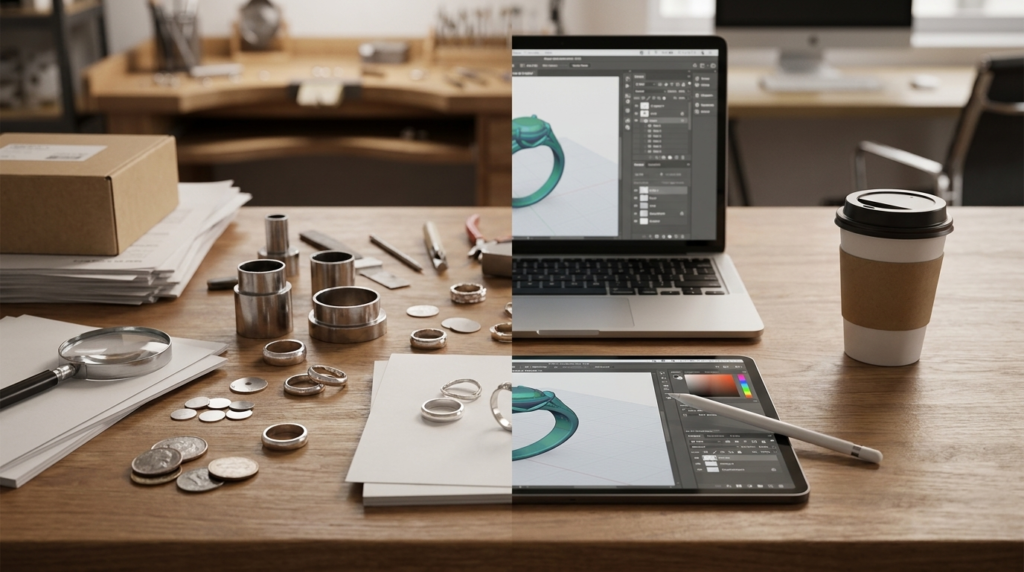
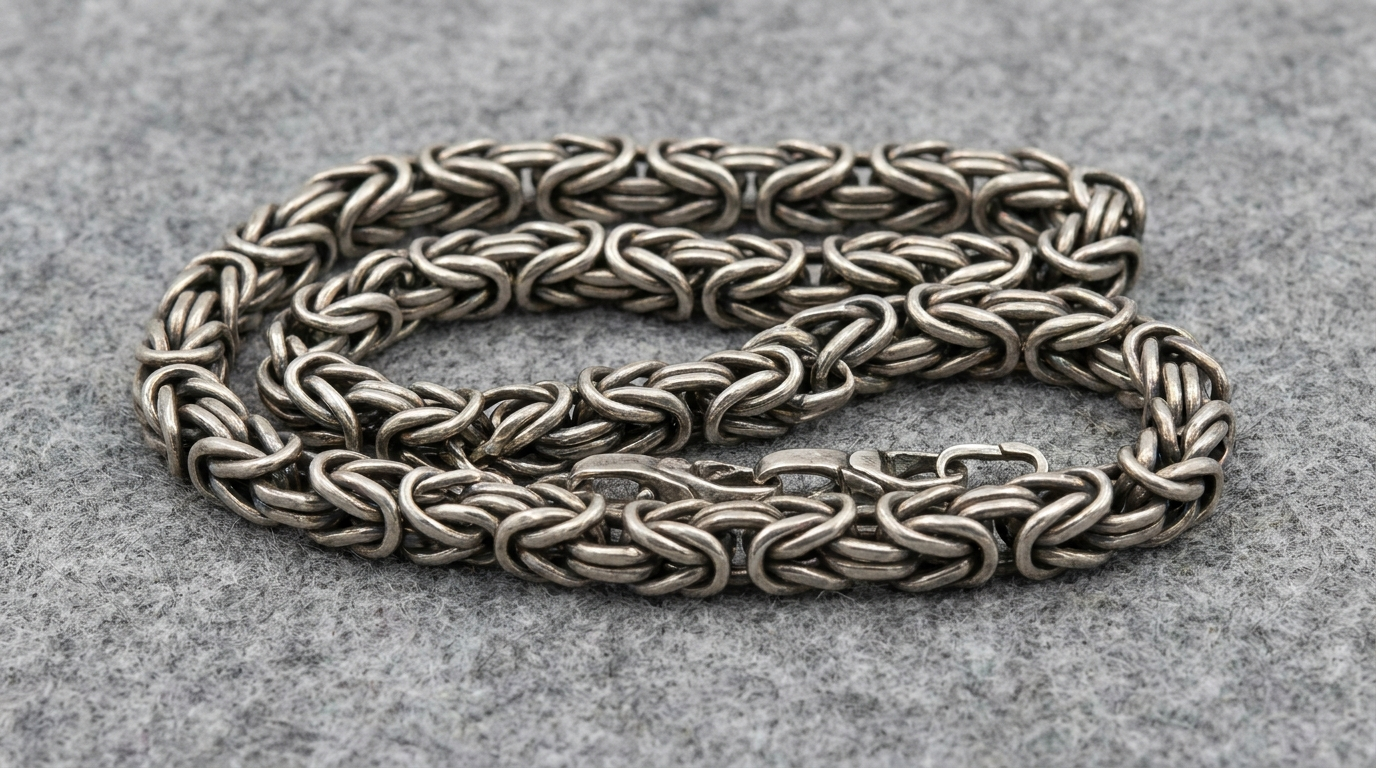
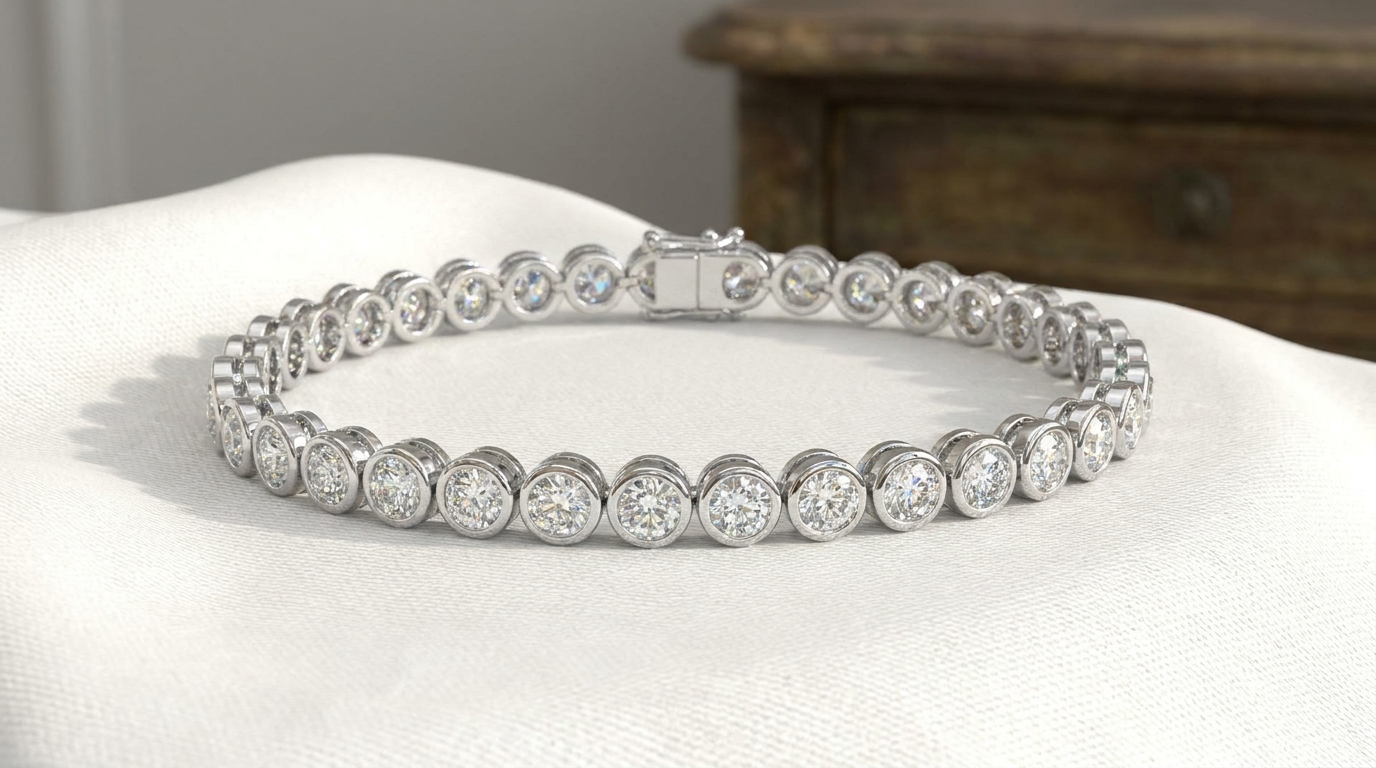
3D jewelry design cuts production costs primarily by eliminating physical sampling waste — every revision happens digitally instead of through repeated wax carving or metal casting, which is where traditional production budgets are lost.
Where Traditional Production Wastes Money
In traditional workflows, every design revision after the first physical sample means recasting in metal — an expensive, material-intensive step. Brands developing a new collection often go through several rounds of physical samples before finalizing a design, with each round consuming metal, labor, and time.
How 3D Design Removes This Waste
Unlimited digital revisions before any metal is cast — adjustments to proportions, settings, or details happen on the computer, with zero material cost per revision.
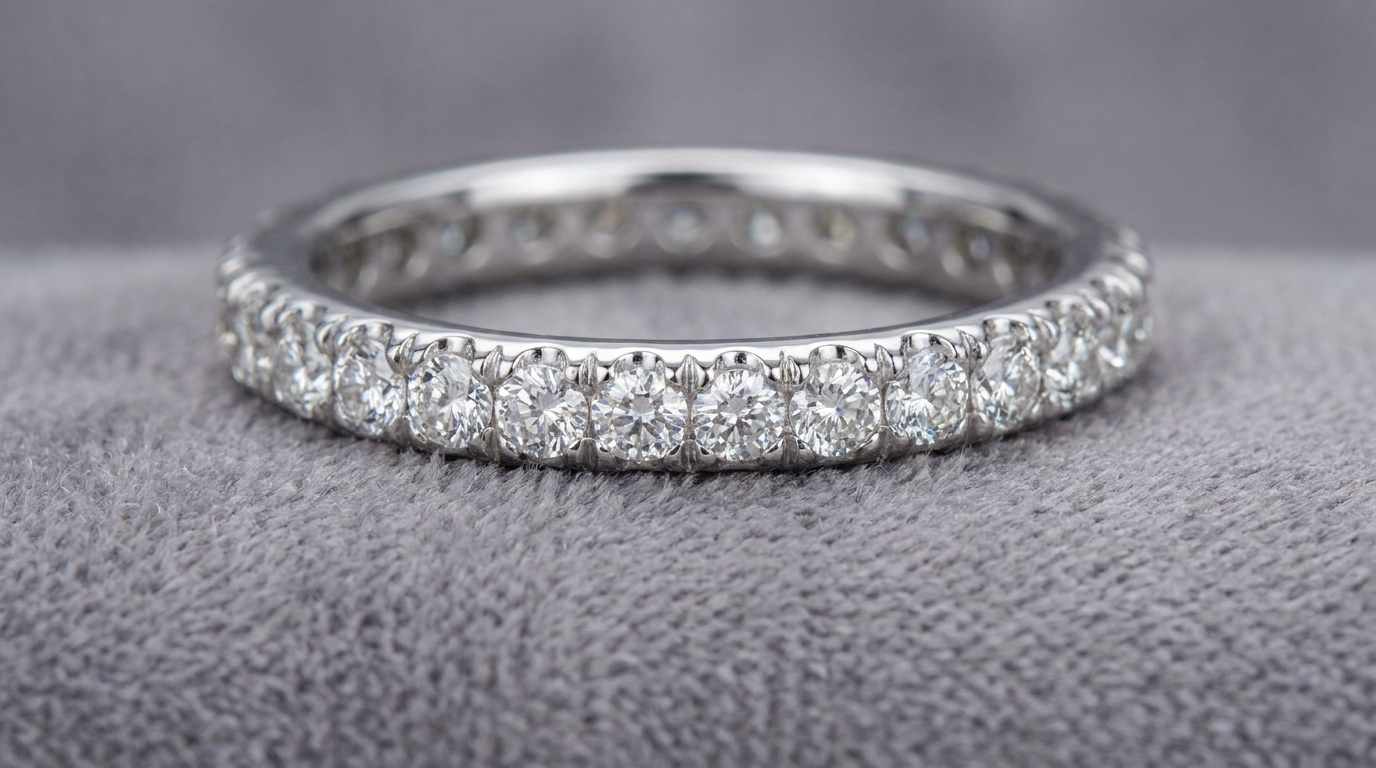
Approval before production commitment — brands can get full stakeholder or buyer sign-off on a photorealistic render before manufacturing a single physical unit.
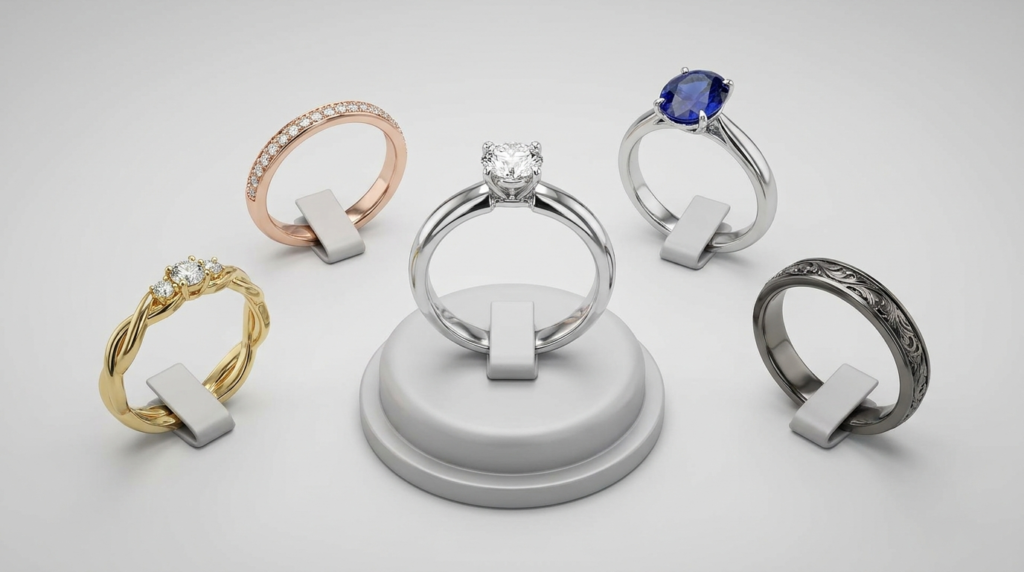
Shared base files across variations — a single base model can generate multiple metal/stone variations without separate physical development for each.
Real-World Cost Areas Impacted
- Sampling costs — reduced dramatically since digital revisions replace most physical sample rounds
- Time-to-market — faster development cycles mean less holding cost on unsold inventory
- Marketing costs — renders eliminate the need for a full photography budget before launch
Frequently Asked Questions
- Does 3D design eliminate physical sampling entirely?
Not entirely — a final physical sample is still typically made to verify fit, weight, and finish before full production, but the number of rounds needed drops significantly.
- Is 3D design cost-effective for small, independent designers too?
Yes — even a single custom piece benefits from digital revision instead of costly wax re-carving.
- How much can a brand typically save switching to 3D-first workflows?
Savings vary by brand and collection size, but the reduction in sampling rounds alone is usually the largest cost factor.