The most common jewelry design brief mistakes — missing measurements, low-quality reference images, and vague revision feedback — are also the easiest to avoid, and fixing them can cut your project timeline significantly.
Mistake 1: Missing or Approximate Measurements
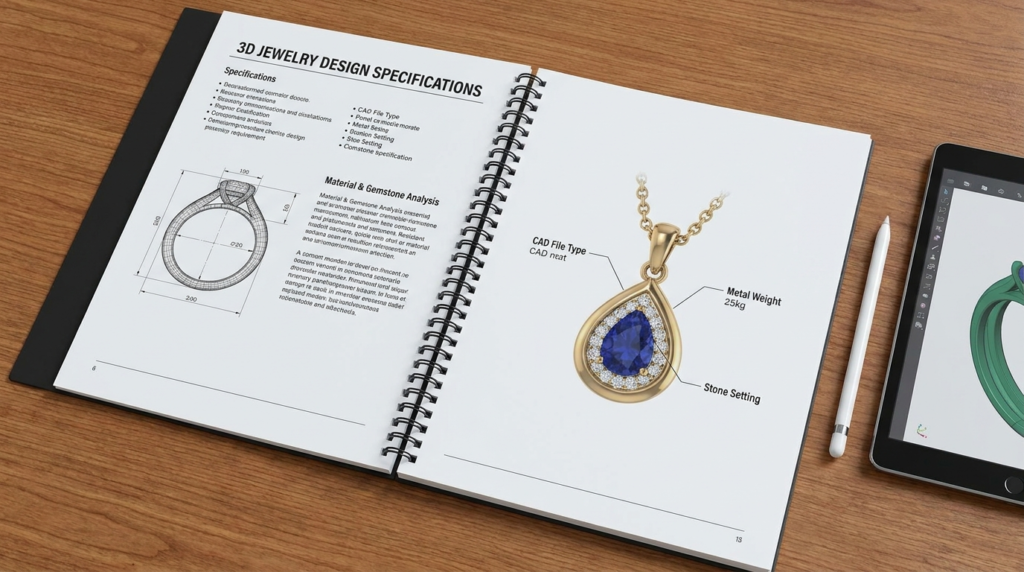
Ring sizes, stone dimensions, and band width need to be exact, not estimated. A vague brief forces the designer to guess or pause the project to request clarification, adding delay before work can even begin.
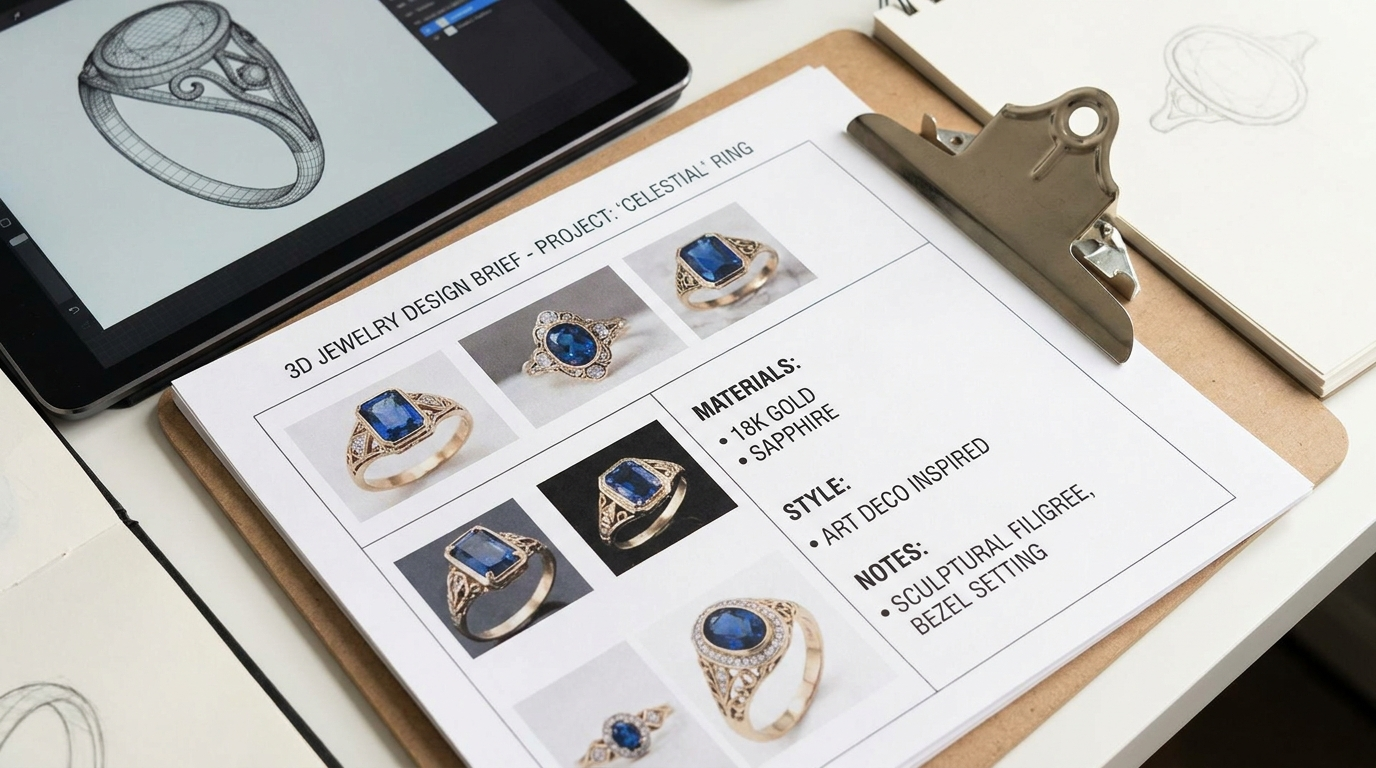
Mistake 2: Low-Resolution or Single-Angle Reference Images
A single blurry photo makes it difficult to capture design intent accurately. Multiple clear angles — front, side, and top view where possible — give the designer far more to work with on the first attempt.
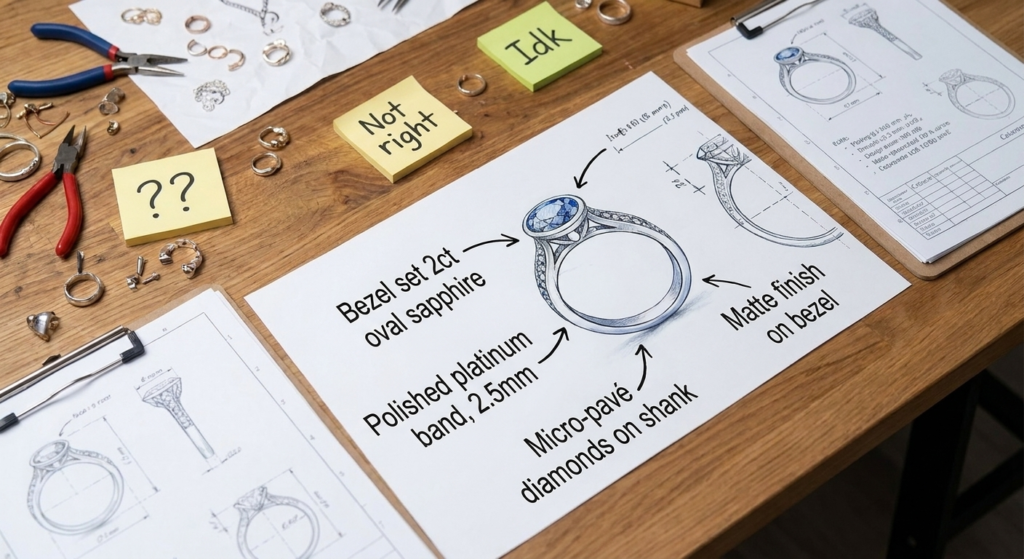
Mistake 3: Vague Revision Feedback
“Make it look better” gives a designer nothing actionable. Specific feedback (“increase the band width by 0.5mm,” “move the side stones closer together”) leads to faster, more accurate revisions.
Mistake 4: Not Specifying the Intended Use Upfront
Whether the file needs to be manufacturing-ready (STL) or is purely for marketing renders changes how the model should be built. Not stating this upfront can mean redoing work later.
Mistake 5: Skipping Budget/Package Clarity Before Starting
Starting a project without confirming which package or price tier applies can lead to scope misunderstandings mid-project — confirming this upfront avoids awkward renegotiation later.
A Quick Pre-Brief Checklist
- Exact measurements (ring size, stone dimensions, band width)
- 2-3 clear reference images from different angles
- Intended final use (manufacturing vs. marketing only)
- Confirmed package/pricing tier
- Any must-have details (engravings, specific stone placement)
Frequently Asked Questions
- What if I don’t have exact measurements yet?
A good designer can work with approximate sizing initially, but expect this to add a clarification round before the first draft.
- Is it better to send too much reference material or too little?
Too much is rarely a problem — more context almost always speeds up accuracy on the first draft.
- Should I approve a design in writing before manufacturing begins?
Yes, always get explicit written approval on the final render before authorizing production — this prevents costly manufacturing errors.
Ready to start? Contact us with your project details →